

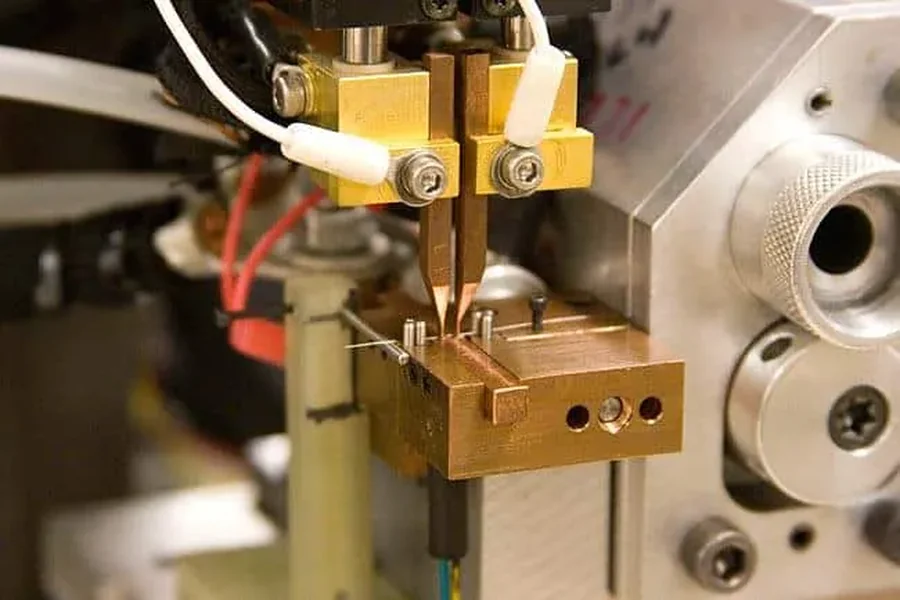
Precision is at the core of effective gunsmithing, not only in how firearms are built but also in how they are repaired. For years, damage to small, intricate components often meant replacement or complete part fabrication. Today, that paradigm is shifting thanks to modern welding techniques that allow gunsmiths to restore and reinforce firearm parts with near-surgical accuracy. Sonoran Desert Institute (SDI) recognizes the importance of these advancements. Technologies like welding and fabrication contribute to extending the life and functionality of firearms through precise and targeted repairs.
From hairline cracks in bolt carriers to worn sear surfaces or chipped receivers, modern welding techniques enable gunsmiths to address issues that once seemed irreparable. These innovative methods not only restore safety and performance but also preserve craftsmanship, laying the groundwork for more efficient and reliable firearm maintenance.
Understanding Micro-Welding and TIG Welding
Micro-welding is a highly controlled process that fuses metal surfaces using pinpoint heat application. Often performed under a microscope, it can create welds as small as a few thousandths of an inch. This precision makes it ideal for firearm components that are delicate, high-stress, or historically significant.
Tungsten Inert Gas (TIG) welding is among the most commonly used forms of micro-welding in gunsmithing. TIG allows for clean, high-strength welds on small parts without excessive spatter or deformation, qualities essential when working on firearms. It provides control over the weld puddle, filler material and heat input, making it suitable for materials like carbon steel, stainless steel and aluminum alloys commonly found in firearm construction. Unlike traditional stick or MIG welding, TIG’s precision helps preserve dimensional accuracy, surface finishes and mechanical integrity, which are vital when working with tight-fitting firearm parts.
Applications in Crack Repair
One of the most valuable uses of micro-welding in gunsmithing is crack repair. Hairline fractures can develop in high-stress areas such as:
- Bolt carriers and locking lugs
- Frame rails
- Slide stops and extractor recesses
- Trigger housing pins
- Receiver junctions on older firearms
These cracks may result from prolonged use, improper heat treatment, or manufacturing flaws. Left unchecked, they can grow, compromising the firearm’s function or safety. Through micro-welding, gunsmiths can repair these fractures by carefully welding along the crack line without compromising the surrounding material. The low heat input of TIG welding minimizes distortion or warping, which is especially important when dealing with tight tolerances or hardened parts.
Once welded, the area can be reshaped, heat-treated and refinished to restore both aesthetic and mechanical strength. In many cases, the repaired part performs just as reliably as a factory-original component.
Restoring Worn or Damaged Parts
Another critical application of micro-welding in gunsmithing is part restoration. Firearms that see frequent use, particularly vintage or collectible models, may experience surface wear, dimensional loss or chipped features that affect their function. Common restoration projects include:
- Rebuilding sear and hammer notches
- Refacing locking lugs or bolt heads
- Restoring firing pin channels
- Reconstructing corners or edges on receivers and frames
- Building up undersized surfaces for re-fitting
Instead of replacing rare or hard-to-find parts, micro-welding allows gunsmiths to add material where needed and then machine or hand-fit the surface back to specification. It preserves the original part and maintains the firearm’s historical or collector’s value. For example, a classic 1911 pistol with a worn slide stop notch might otherwise require a replacement slide, risking authenticity. With micro-welding, a gunsmith can rebuild the notch precisely and blend it into the existing metal, keeping the original slide intact.
Material Compatibility and Challenges
Micro-welding offers incredible benefits, but it also demands a deep understanding of metallurgy. Not all steels or alloys behave the same under heat. Improper filler selection, heat input, or cooling rates can result in embrittlement, warping, or poor weld adhesion. That’s why skilled gunsmiths study:
- Base material composition (e.g., carbon content, hardness, grain structure)
- Welding techniques suited for specific alloys
- Post-weld heat treatment processes
- Machining and finishing techniques to restore tolerances
Working under magnification and maintaining a controlled environment is often necessary to produce consistent and invisible welds. For professionals, the learning curve is steep, but the payoff is high. Properly executed micro-welds are strong, clean and nearly indistinguishable from the surrounding metal, offering both cosmetic and functional restoration.
Customization and Performance Enhancement
Beyond repairs, micro-welding enhances firearm performance. Gunsmiths can add material to triggers for tuning, reinforce wear-prone areas or reshape controls to improve ergonomics. Performance shooters, for example, may request customized sear angles or hammer geometry to achieve cleaner breaks or faster resets.
In competition shooting, even minor dimensional changes can improve reliability and control. Micro-welding enables gunsmiths to tweak parts incrementally and refine tolerances that would be difficult to achieve through machining alone. Because the process is additive, micro-welding allows for reversible experimentation. If a surface is overbuilt, it can be machined down or adjusted. This flexibility supports creative solutions that are both precise and efficient.
Preserving Legacy Firearms
SDI recognizes the value of welding processes as an essential component of a comprehensive education in modern gunsmithing. By blending traditional craftsmanship with advanced technology, its online coursework prepares graduates to diagnose, repair, and restore firearms with exceptional quality and precision. The program emphasizes both foundational knowledge and hands-on application to ensure mastery of each technique. This forward-thinking approach positions future gunsmiths to stay competitive in a rapidly evolving firearms industry.
For collectors and restorers, advanced welding techniques offer a significant advantage: they allow for the non-invasive restoration of classic and antique firearms. Unlike part replacement, which can lower collector value, repairing original components maintains the firearm’s historical authenticity. In many cases, precision welding is the only feasible solution for saving parts that are no longer in production or impossible to replace. From cracked lever-action receivers to worn muzzle crowns on old revolvers, these techniques give new life to heirlooms and historically significant pieces.
As the firearms industry continues to advance, tools like precision welding are reshaping what is possible in repair and customization. From preserving vintage rifles to enhancing tactical pistols, surgical precision is no longer confined to the operating room and can now be found in the gunsmith’s shop.
