

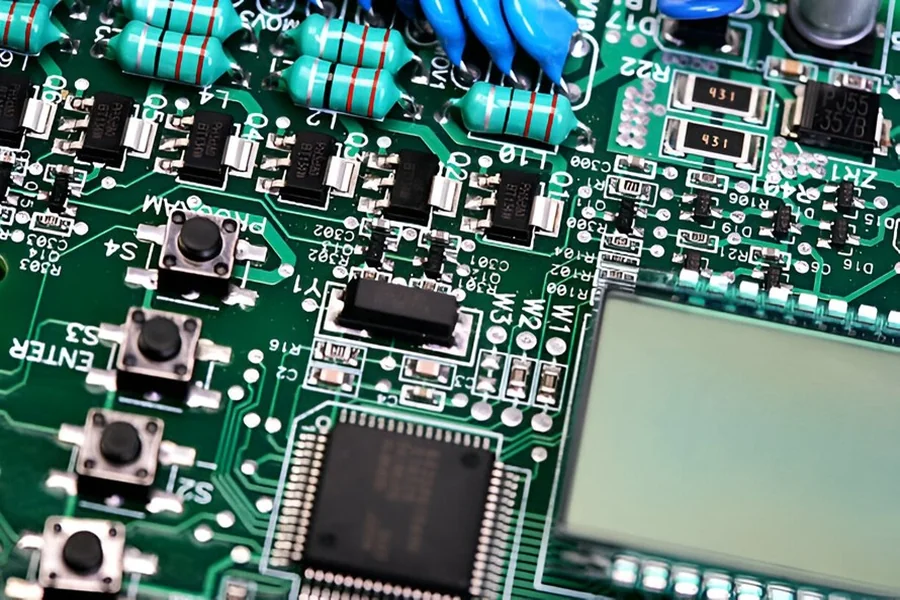
As electronic devices become increasingly compact and sophisticated, the need for precise, high-density circuit board assembly has grown dramatically. Fine pitch PCB assembly has emerged as a critical process in modern electronics manufacturing, allowing engineers to mount extremely small components with precise alignment and minimal spacing. This advanced technique enables the creation of powerful, miniaturized devices used in industries ranging from consumer electronics to aerospace and medical technology.
Understanding Fine Pitch PCB Assembly
Fine pitch PCB assembly refers to the process of mounting components with very narrow lead spacing—typically less than 0.65 mm—onto a printed circuit board. It demands exceptional accuracy and advanced manufacturing technologies to ensure reliable electrical connections and long-term performance.
This assembly process is particularly important for surface mount devices (SMDs), such as microcontrollers, integrated circuits (ICs), and ball grid arrays (BGAs), which have increasingly small footprints. With the reduction of lead spacing, even the smallest deviation during soldering can lead to short circuits, open joints, or signal interference. Therefore, fine pitch assembly requires specialized machinery, precise solder paste application, and rigorous inspection methods.
Key Technologies Used in Fine Pitch PCB Assembly
Modern fine pitch PCB assembly relies on a combination of advanced tools and processes that guarantee precision. The most critical among them are automated pick-and-place machines equipped with high-resolution vision systems. These machines can position components within microns of accuracy, ensuring that even the smallest packages are aligned perfectly.
Another crucial step is solder paste printing. Fine pitch components require very controlled paste deposition, typically achieved using laser-cut stainless-steel stencils and automated printing systems. The reflow soldering process must also be tightly controlled to prevent solder bridging and tombstoning effects.
Inspection and quality assurance are equally vital. Automated Optical Inspection (AOI), X-ray analysis, and in-circuit testing are commonly used to verify the placement accuracy and solder joint integrity. These checks help maintain the reliability that fine pitch assemblies demand, especially in mission-critical applications.
Advantages of Fine Pitch PCB Assembly
The adoption of fine pitch PCB assembly brings several benefits that make it indispensable in today’s electronics manufacturing landscape. First and foremost, it allows for higher component density, enabling designers to pack more functionality into smaller form factors. This is particularly useful in modern devices like smartphones, wearable technology, medical sensors, and high-performance computing modules.
Fine pitch assembly also improves signal integrity and electrical performance. With shorter trace lengths and reduced parasitic effects, circuits can operate at higher speeds with less noise interference. Additionally, this approach contributes to better thermal management and improved mechanical stability.
Another key advantage is design flexibility. Engineers can integrate complex systems into compact boards without compromising reliability, making fine pitch assembly ideal for next-generation innovations.
Challenges in Fine Pitch PCB Assembly
While fine pitch technology offers impressive benefits, it also introduces several manufacturing challenges. The reduced spacing between leads means that even slight variations in alignment or solder volume can result in defects such as bridging or insufficient solder joints. Managing these risks requires not only advanced equipment but also skilled technicians who understand the nuances of the process.
Environmental factors, such as humidity and temperature, must also be controlled throughout the production process to ensure consistent soldering results. Furthermore, cleaning fine pitch assemblies after reflow can be complex, as flux residues can become trapped under tightly spaced components, potentially affecting long-term reliability.
High-quality fine pitch PCB assembly thus depends on a combination of precision machinery, strict process control, and experienced engineering oversight.
Applications of Fine Pitch PCB Assembly
Fine pitch technology is widely used in industries that demand compact, high-performance electronics. Consumer electronics manufacturers rely on it for assembling smartphones, tablets, and gaming consoles. The automotive sector uses it for advanced driver-assistance systems (ADAS) and infotainment modules.
In the medical field, fine pitch assembly is crucial for devices like pacemakers, diagnostic sensors, and portable imaging equipment, where reliability and miniaturization are paramount. Similarly, aerospace and defense applications leverage this technology for high-density, ruggedized electronic systems capable of withstanding extreme environments.
Essentially, fine pitch PCB assembly plays a vital role wherever space is limited, but performance and reliability cannot be compromised.
Ensuring Quality and Reliability
Achieving perfection in fine pitch PCB assembly requires comprehensive testing and inspection at every stage. AOI systems verify component alignment and solder joint quality, while X-ray imaging identifies hidden defects in ball grid arrays (BGAs) and other complex packages. Functional testing ensures that the final assembled boards meet all electrical and mechanical specifications.
Manufacturers also adopt stringent process validation and statistical process control (SPC) techniques to maintain consistency across production batches. These quality assurance measures are critical, particularly in industries where a single defective board can have severe consequences.
Conclusion
As electronic devices continue to evolve toward greater complexity and miniaturization, fine pitch PCB assembly stands as a cornerstone of precision manufacturing. It enables engineers to integrate advanced functionality into compact designs without sacrificing performance or reliability. Whether for consumer products, automotive systems, or medical instruments, fine pitch technology ensures that every component works flawlessly within tight tolerances.
For companies looking to achieve exceptional quality and precision in their production, partnering with a trusted PCB assembly service provider is the best way forward. An experienced assembly partner offers the expertise, technology, and quality control needed to handle fine pitch requirements efficiently—ensuring that your designs are transformed into reliable, high-performance electronic products ready for the global market.
