

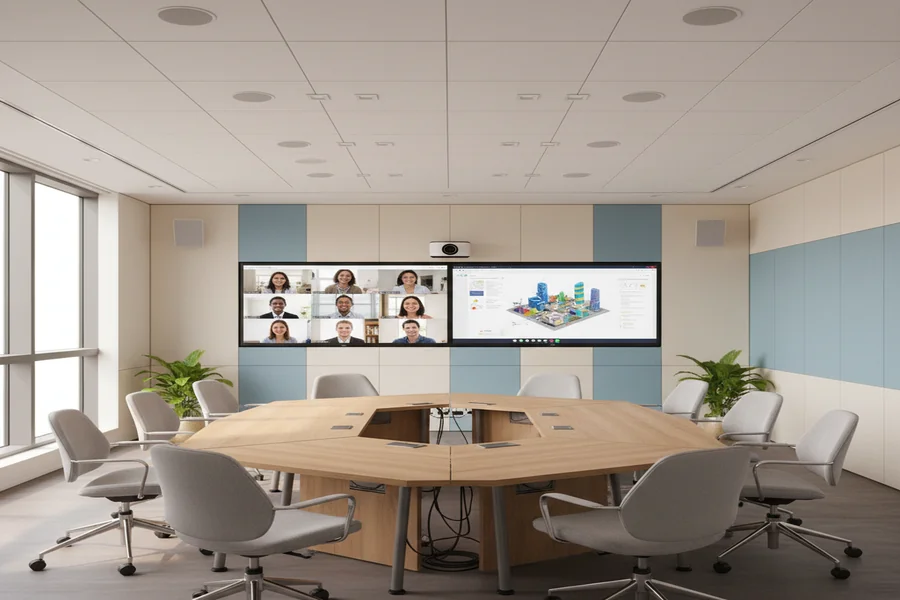
Creating a high-performing hybrid environment requires a strategic approach to technology and office layout. As teams split their time between remote locations and the office, the primary goal for businesses is to ensure meeting equity, where every participant has an equal voice and presence regardless of their physical location. To achieve this, organizations must move beyond basic presentation setups and invest in professional-grade tools that foster real-time collaboration. For those looking to refine their office setup, a comprehensive conference room equipment list serves as the foundation for creating spaces that support both in-person interaction and remote participation.
Essential components for a hybrid conference room equipment list
The modern conference room relies on a sophisticated stack of hardware to function effectively. At the core of this setup is a professional-grade video conferencing system, which should include high-resolution cameras with artificial intelligence tracking to ensure remote participants have a clear view of all speakers in the room. Audio performance is equally critical; utilizing ceiling-mounted beamforming microphone arrays and echo-canceling speakers helps eliminate background noise and ensures natural, clear communication. Furthermore, incorporating dual displays allows teams to view remote colleagues on one screen while sharing collaborative content on the other, adhering to the important one-face-per-screen rule that enhances engagement during complex discussions.
Improving space utilization and connectivity
Beyond hardware, the efficiency of a hybrid office is dictated by how well the space is managed and connected. Reliable, high-speed networking with built-in redundancy is essential to prevent meeting disruptions, while room scheduling panels and booking software help teams manage space usage effectively. By integrating occupancy sensors, businesses can gather valuable data on how rooms are actually being used, allowing leadership to make informed decisions about future design changes. This data-driven approach ensures that investments in new technology align with the actual needs of the workforce, ultimately leading to higher productivity and better meeting outcomes across the entire organization.
Furniture and acoustic design for better collaboration
The physical environment plays a significant role in how well technology performs and how comfortable participants feel during long sessions. Reconfigurable furniture, such as mobile tables and ergonomic seating, allows teams to adapt their environment for different types of work, whether it is a formal board meeting or a creative workshop. Additionally, acoustic management is a vital but often overlooked element of a successful hybrid room. Installing acoustic wall panels, sound-dampening flooring, and proper door seals prevents sound leakage and ensures that the audio captured by your technology remains crisp and professional. By balancing these physical design elements with the right audiovisual tools, companies can create an inclusive atmosphere that empowers every employee to contribute their best work.
